
Intraculturalism, a pillar of Balanced and Inclusive Education (BIE), is a transformative approach that fosters a deep understanding of one’s own culture while recognising its interconnectedness with others. This concept is about celebrating differences while acknowledging our shared humanity. It encourages us to look within our cultural frameworks, valuing diversity and promoting inclusivity within educational systems.
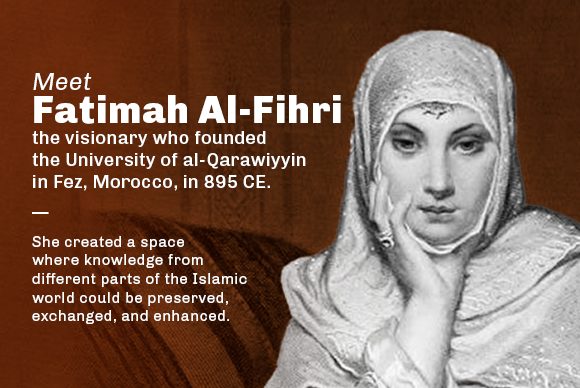
Fatimah Al-Fihri, the visionary who founded the University of al-Qarawiyyin in Fez, Morocco, in 895 CE, exemplifies the essence of intraculturalism. By establishing the world’s first university, Al-Fihri created a space where knowledge from different parts of the Islamic world could be preserved, exchanged, and enhanced. This institution became a beacon of learning, fostering intellectual exchanges that bridged cultural and disciplinary divides within the broader Islamic culture.
Her work did not only advance education but also highlighted the importance of understanding and integrating various cultural perspectives, thereby nurturing a richer and more inclusive society. Al-Fihri’s legacy is a testament to how intraculturalism can drive social transformation and educational development.
History is replete with examples of cultural exchange. From the Silk Road to the transatlantic slave trade, cultures have interacted, influenced, and transformed each other. This exchange of ideas, goods, and people has shaped civilisations and continues to enrich our lives today.
Looking at some examples of cross-cultural pollination across disciplines like architecture, mathematics, science, food, arts, and music, it is evident that:
- Architectural styles have been influenced globally, from the Greco-Roman influence on the Taj Mahal to the US Capitol.
- Mathematical systems, such as the Arabic numerals, have travelled across continents, shaping our understanding of numbers.
- Scientific discoveries have been shared and built upon, with papermaking in China being a prime example of knowledge diffusion.
- Culinary traditions have exchanged ingredients, techniques, and flavours, creating a diverse global cuisine.
- Artistic styles and musical forms have been adapted and reinterpreted, leading to a rich creative expression.
These examples showcase the dynamic nature of culture and the interconnectedness of our world. They highlight how cultural exchange has enriched our lives and shaped the societies we live in.
Benefits of Intraculturalism
- Fosters empathy and understanding: By exploring diverse perspectives, students develop a deeper appreciation for different cultures and ways of life.
- Enhances critical thinking: Interculturalism encourages students to question their own assumptions and stereotypes.
- Prepares for global citizenship: In an increasingly interconnected world, intercultural competence is essential for success.
- Promotes creativity and innovation: Exposure to different cultures can spark new ideas and approaches to problem-solving.
The Organisation of Southern Cooperation (OSC) recognises the significance of intraculturalism in achieving Balanced and Inclusive Education. Our Universal Declaration of Balanced and Inclusive Education (UDBIE) emphasises:
- Inclusion: Valuing diversity and creating inclusive learning environments.
- Equity: Ensuring equal opportunities for all students, regardless of cultural background.
- Cultural relevance: Integrating local cultures and perspectives into the curriculum.
By embracing intraculturalism, we celebrate differences while recognising our shared humanity.
Contact us to learn more about building Balanced and Inclusive education systems, to create a world where diversity is celebrated, and where individuals can thrive while contributing to the collective good.


