
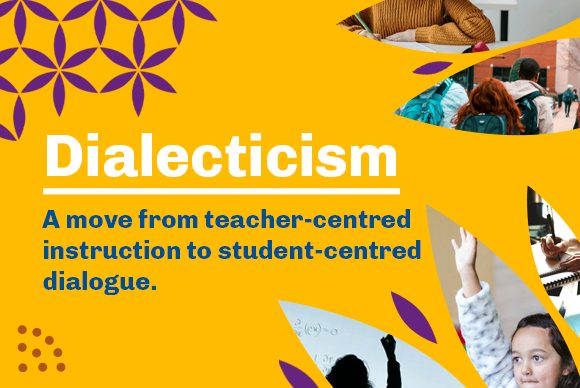
Dialecticism is more than a teaching method; it’s a philosophy of learning that places students at the heart of the educational process. Rooted in the belief that knowledge is co-constructed through critical inquiry and dialogue, it challenges the notion of the teacher as the sole authority in the classroom. Instead, it fosters a learning environment where students become active participants, questioning assumptions, exploring multiple perspectives, and constructing their own understanding of the world.
Imagine a classroom where students aren’t passive recipients of information but are actively engaged in exploring complex issues. Where discussions are vibrant and respectful, challenging preconceived notions and building consensus. Where students are encouraged to take ownership of their learning, motivated by curiosity and a desire to make a difference. This is the power of dialecticism.
Key components of dialecticism include:
- Problem-posing dialogue:Students actively identify and explore problems rather than passively receiving information.
- Critical exchange:Through respectful debate and discussion, students challenge ideas, refine arguments, and build consensus.
- Proactive participation:Students take ownership of their learning, motivating themselves to seek knowledge and apply it to real-world challenges.
By centering on student voice and perspective, dialecticism creates a space where all learners feel valued and respected. Moreover, it develops the critical thinking, problem-solving, and communication skills essential for active citizenship.
Implementing Dialecticism
To effectively implement dialecticism, educators can consider the following steps:
- Create a culture of inquiry:Encourage students to ask questions, challenge assumptions, and seek evidence.
- Structure opportunities for dialogue:Design lessons and activities that promote student-led discussions and debates.
- Utilise authentic assessments:Evaluate students’ ability to think critically, solve problems, and communicate effectively.
- Provide ongoing professional development:Support teachers in developing the skills necessary to facilitate dialectic classrooms.
The Organisation of Southern Cooperation recognises the transformative power of dialecticism and encourages its implementation in education systems across the Greater South. By embracing this approach, students become equipped with knowledge, skills, and values needed to thrive in an ever-changing world.
Contact us to learn more about building Balanced and Inclusive education systems, to create classrooms where dialogue ignites minds, where critical thinking flourishes, and where students become the architects of their own learning.


