
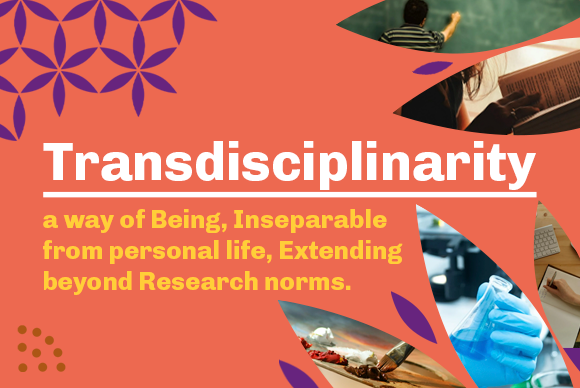
The world we live in is interconnected and complex. Addressing contemporary challenges like climate change, poverty, and pandemics requires a holistic approach that transcends traditional disciplinary boundaries. This is where transdisciplinarity emerges as a powerful framework for education.
Origin and Definitions of Transdisciplinarity
The concept of transdisciplinarity has its roots in the early 20th century. Thinkers like Edgar Morin, a leading French philosopher, sociologist, and inter-disciplinary thinker, advocate for a “reform of thought” that moves beyond the limitations of compartmentalised knowledge. However, the term truly gained momentum in the latter half of the century as educators and researchers recognised the need for integrated learning approaches.
Transdisciplinarity is often defined as the integration of knowledge, methods, and perspectives from various disciplines, including non-academic fields and indigenous knowledge systems. Unlike interdisciplinarity, which focuses on collaboration between disciplines, transdisciplinarity seeks to go further. It fosters a space where disciplines merge, creating entirely new perspectives and solutions.
Beyond Disciplinary Boundaries
Imagine an education that seamlessly blends science, art, and philosophy. Where students explore the intricate relationship between ecology and economics, or between culture and technology. This is the promise of transdisciplinarity. It’s about breaking down silos, connecting knowledge, and fostering a holistic understanding of the world.
Rooted in the idea that knowledge is interconnected, transdisciplinarity challenges the traditional approach of compartmentalised learning. It goes beyond interdisciplinary collaboration to create a space where disciplines merge, generating innovative solutions better known as endogenous technologies, to solve complex problems.
The Organisation of Southern Cooperation (OSC) recognises the transformative potential of transdisciplinarity. Our Universal Declaration of Balanced and Inclusive Education emphasises the integration of diverse knowledge systems, including non-academic knowledge, to address global challenges.
Key Principles of Transdisciplinarity:
- Integration of Knowledge: Blending diverse perspectives from various fields, including non-academic sources.
- Problem-Focused Learning: Addressing real-world challenges that require a holistic approach.
- Collaboration: Fostering partnerships between academics, practitioners, and community members.
- Critical Thinking: Developing the ability to analyse complex issues from multiple perspectives.
- Ethical Considerations: Integrating values and ethics into problem-solving processes.
Transdisciplinarity in Action
In Africa, initiatives like Living Labs bring together researchers, policymakers, and communities to address urban challenges. In Asia, the Grameen Bank exemplifies how economic principles can be integrated with social empowerment. These examples demonstrate the power of transdisciplinarity to create positive change.
Implementing Transdisciplinarity
To successfully integrate transdisciplinarity into education, we must:
- Reform curricula: develop interdisciplinary programs that address complex issues.
- Support teacher development: provide training in transdisciplinary teaching methodologies.
- Foster partnerships: collaborate with community organisations, businesses, and government agencies.
- Create spaces for dialogue: promote open communication and knowledge sharing.
- Evaluate and refine: continuously assess the impact of transdisciplinary initiatives.
Transdisciplinarity is not a quick fix, but a long-term commitment. By embracing this approach, we can equip students with the skills and knowledge to become critical thinkers, problem-solvers, and global citizens.
Contact us to learn more about building balanced and inclusive education systems to build a future where education is truly transformative, where disciplines converge, and where endogenous innovative solutions emerge.


